Showing posts with label materials. Show all posts

29 April 2008

Now I know I promised that the unit on Materials was finally over; well, I guess I lied! Inadvertently, of course.....

It was perhaps Rekik who listened the most carefully on the day that I suggested we had 'crisp-eating' for homework.  He made it his personal goal to provided us with one empty crisp bag for each person in the class.  And 24 school-days later (yep, that's a bag of crisps each day!) he (with a bit of help from his friends) achieved his goal.

Which meant that today was the day we finally found out what material crisp bags are made of.  To begin with, we thought back to the 'sticky' problem Patricia had when trying to identify what material her sweet wrapper was made from (see an earlier post). 

Having thought carefully, Joe was confident that crisp bags are made from plastic.  Max agreed with him.  Tanmay wasn't so sure.  He suggested they might be made from paper; Matthew Duke thought this too.  And then Danah said they might be made from foil with Swati adding that foil is metal, and that she too thought they might be made from metal.

This time, the test we planned would involve the bags being put into a hot oven.  Evie told us that paper would burn in the oven.  Per thought that metal would melt, but when Fiona told us that her dad uses foil to cover potatoes when he cooks them in the oven, Per changed his mind; Joe said it would probably just get hot.  Rekik thought that plastic would melt.  We also found out that when plastic is made it is often stretched during the process and that if it is then heated afterwards, it 'relaxes' or shrinks to a 'more comfortable', smaller shape.

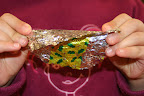
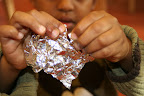
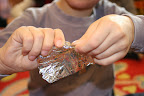
So group by group we went downstairs to the oven and put in a tray of crisp bags.  We crowded round the glass door (well, it was pretty exciting) and watched.....and before our very eyes, the crisp bags shrank - to less than half their original size.

IMG_5516

Back in the classroom we did a quick survey.  What are crisp bags made from?  How many people think it's paper (a couple of uncertain hands raised; but lowered again when Evie reminds us that paper would 'get on fire' if it went in the oven).  How many think they are made from metal?  No hands raised.  From plastic?  A veritable forest of arms.

PS For anyone who cares about these things, this Blog was posted using Windows Live Writer.

08 April 2008

April (snow) Showers

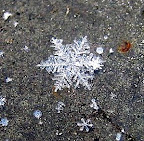
Now I know I admitted that the unit on materials is over; and it really, truly is. But when you look outside and see huge fat flakes of snow swirling elegantly earthwards; well, you just 'gotta' get out there and investigate.

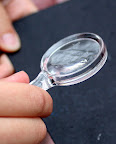
So togged up - hooded, buttoned and zipped; out we went, armed with magnifying glasses (all the better to see them with) and some black card on which to catch our flakes.

It was not really quite cold enough for the snow to settle properly, but it rested long enough
on hair
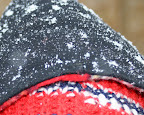
and hat
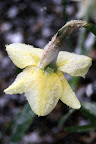
and even the poor daffodils

for a closer look.

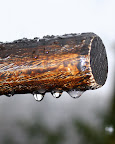
We noticed that it melted fast on the wooden handle of our rocking horse

and much too quickly on tongues for the photographer!

We were able to catch sufficient on our black paper for a proper look, although we found we had to work fast as they melted really quickly on that too.


Back in the classroom, with hands rubbed warm (another lesson perhaps?) we got to thinking about what we had seen. We began by asking ourselves 'What is snow?'

Joe: Snow is water
Chris: It is cold water that froze and turned into snow
Dangi: Snowflakes are formed when water evaporates, goes up and goes really high and then it turns into snowflakes and falls back down again

If you want to find out even more, click on this link.

So snow; what's it like?

'It is light; it disappears when you touch it,' said Patricia. Evie told us (with feeling!) that it is cold. Joe said, with a grin, that you can stick it together.

And then, with our new knowledge of adjectives, we got to describing what we had seen.


'Snow is round' said Umar. 'Star-shaped' noticed Christopher and Sofia. Joe saw flower shapes and Naoya thought he saw triangles. Vaishnavi saw lots of lines and Giulia described the shapes she saw as being like a house. 'Pentagons?' suggested Dangi. Per saw tangled spiders' webs or tentacles; Max was reminded of coconut shreds and Joe of grains of rice.

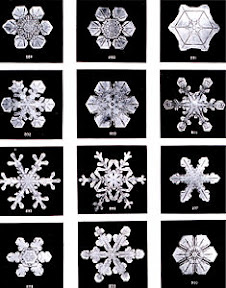
Next time you are lucky enough to catch a snowflake, why not try and take a closer look. Here are some of the shapes you might be able to see. The photographs below were taken in 1902 (how long ago is that?) by a man called Wilson Bentley:


What words could you use to describe them?
What are some ways in which they are the same?
How are they different?

02 April 2008

Golden Nuggets - and a nod to Colonel Sanders!

You might well ask yourself what happens when one unit is 'finished'. You see, our unit on Materials is officially at an end. But the great thing about units is that they can be pretty exciting; so exciting that even after the official end, there are still lots of really cool things to discover, to talk about and to look at.

One such really cool thing was brought to us today; by Per. This is what he had to say:

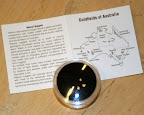
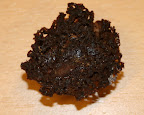
'These are gold nuggets.'


Immediately Giulia asked, 'What's a nugget?'

Per explained, 'A nugget is like a small round fat piece of rock'.

Fiona joked, 'But not a chicken nugget!'

Ah ha! I wonder. Perhaps not really such a joke; rather a clever piece of thinking (even if at the time Fiona didn't quite realise it.) Why not, do you think?

Maya got her thinking cap on. 'Is it because chicken nuggets look like gold nuggets?' she wondered.

When we really thought about it we decided that yes, it really could be why they are called chicken nuggets. Because they do look a bit like gold nuggets.

But (as usual) I digress!

Back to Per's (real) gold nuggets.

'I have a small (very, very small - so small that the teacher needed to use magnifying glass to decipher the writing!) book (learning point here: booklet = small book; piglet = small pig; twiglet = small twig (unless of course you are a Brit) that tells where it was found.

It was found in Australia in the Tanami desert.'

27 February 2008

Patricia's Mystery Material

Patricia tells us: 'I'm not sure if this is paper. I got it from a sweet that I got at Christmas.


It's shiny.'

Max then comments: 'I think it's foil because paper doesn't feel the same way and also foil is silver and paper is white.'

Dangi says: 'I think it's metal.'

Max adds: 'It is metal; foil is made of metal.'

Then Joe starts thinking: 'I think it's made out of plastic because it feels more like plastic than metal. Plastic feels warm.'

Well, what can it be? Paper? Metal? Plastic?

Here's what we found out:
  • First we tried the tear test. Everyone was given a small piece of foil to tear. Joe tried to tear the mystery material. We found that the foil tore very easily


    but the mystery material was too tough; it was impossible to tear.


  • Next we tried the squish test. Everyone was asked to squish their piece of foil very hard. Joe tried to squish the mystery material. We found that the foil stayed squished up tight


    but the mystery material opened up again.


    So what do you think our mystery material is? Is it paper? Is it metal? Is it plastic? Is it something else altogether?

21 February 2008

feely games

The other day, we watched a video about fabric.

We found out that fabric can be made from 'natural' materials like wool and silk (which come from animals) and cotton (which comes from a plant).

Fabrics like nylon and polyester and rayon are made from 'man-made' materials. 'Man-made' materials all come from oil.

As well as looking different, fabrics can also feel different; they have different textures.

We thought that we could use the way a fabric feels to make a game to play. Our games would be a little bit like those where you have to turn over cards to find matching pairs. But instead of looking to see if you have found a matching pair, you would have to feel the difference.

First of all we cut out a set of twelve cards, all the same size and shape. Then we emptied our huge bag of fabric onto the carpet.....and had fun choosing six pieces, all of which had to have a different texture.

We carefully cut each piece of fabric into two, making sure they were the same shape and size as our cards.

Finally, we glued the fabric pieces onto our cards.

Like this.....

06 February 2008

How does heat change things?

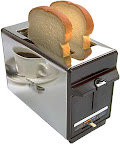
We know that if you put a piece of bread.....
in the toaster.....
.....it changes. First you begin to smell a delicious smell that makes your mouth water. Then, when it pops out, you notice that it looks different as well; the bread has changed colour; it has turned a golden brown colour (and if you are unlucky it might even be a bit black!) It has also changed texture; it is now probably crisp.


We wondered if the amount of heat made a difference.
This is what we did to find out.

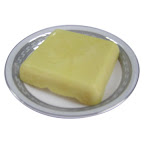
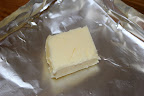
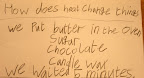
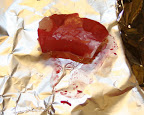
We took two pieces of butter

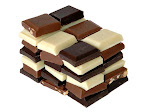
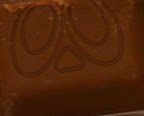
two pieces of chocolate

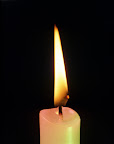
two pieces of candle wax

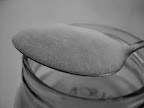
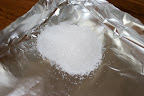
and two spoons of sugar

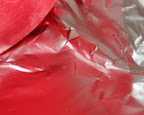
We put them each onto a square of tinfoil.


We placed one set in a warm place (we sat them on top of a table lamp) and the second set in a hot oven


We left both sets for five minutes and then we observed closely to see if there was a difference between them.

This is what we noticed:

In the warm place.....


the butter and the chocolate melted a little round the edges

the candle wax started to melt a tiny bit

and the sugar didn't change at all.

In the hot oven.....

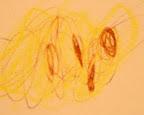
some parts of the butter turned brown and the yellow fat bubbled

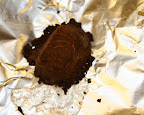
the chocolate did not melt; it went black round the edges and underneath

the candle wax turned to a liquid

and the sugar changed to a darker colour and it melted a bit and stuck together.
01 February 2008

Always dry your hands......

What is the best type of paper for drying your hands?
Of course, everyone knows how important it is to dry your hands thoroughly after washing them. But today we got thinking; were we using the best type of paper for the job?

We thought that to do the job well, paper towels would need to soak up water but be strong enough not to disintegrate.

This is what we decided to do:
We chose four different kinds of paper: toilet paper, writing paper and the two different paper towels we have in our school.

First we dipped two fingers into a beaker of water.


We let the water drain off onto one piece of paper. We counted up to ten.


We did the same for the other three pieces of paper.
We observed carefully to see which paper soaked up the most water.


Even though it was quite absorbent we noticed that some of the toilet paper had holes in it.
The writing paper had hardly absorbed any water at all; there was a puddle of water on the surface.
The two paper towels had absorbed about the same amount of water.

We also did the 'rip' test (ask someone in Class 2i to explain how!) to see which paper was the strongest; we found that the toilet paper ripped really easily, the writing paper was very difficult to rip and the two paper towels were about the same.

So it seems as though the paper towels at school really are the best thing for the job of drying our hands; they absorb water well and they are strong enough not to disintegrate too easily.